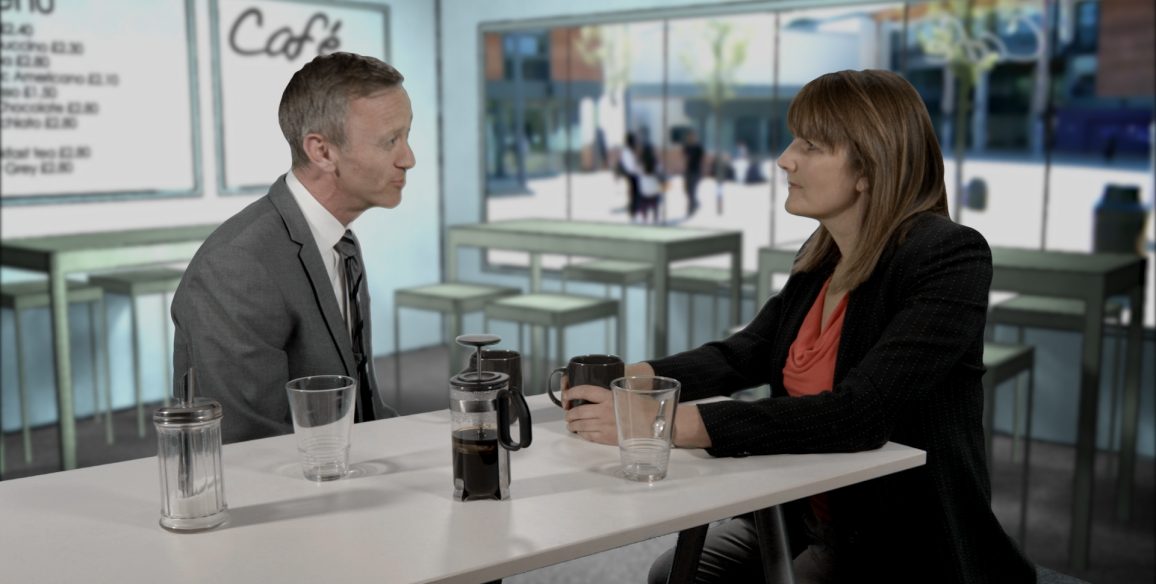
Shooting against a green screen means you can replace that screen with anything you like. Why would you want to do that?
Are you sure that's the only free room?
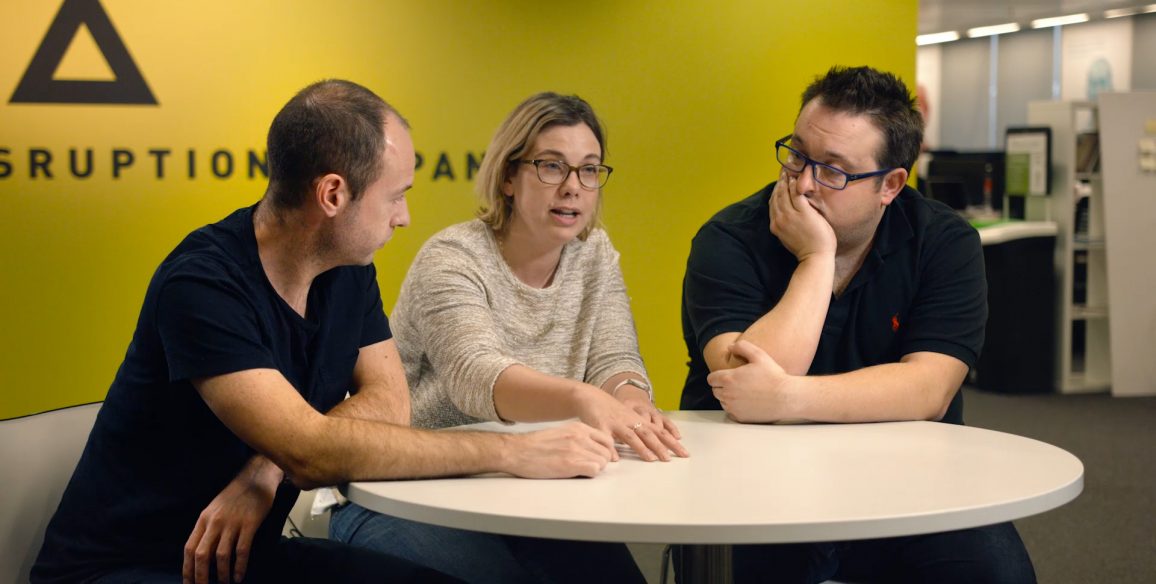
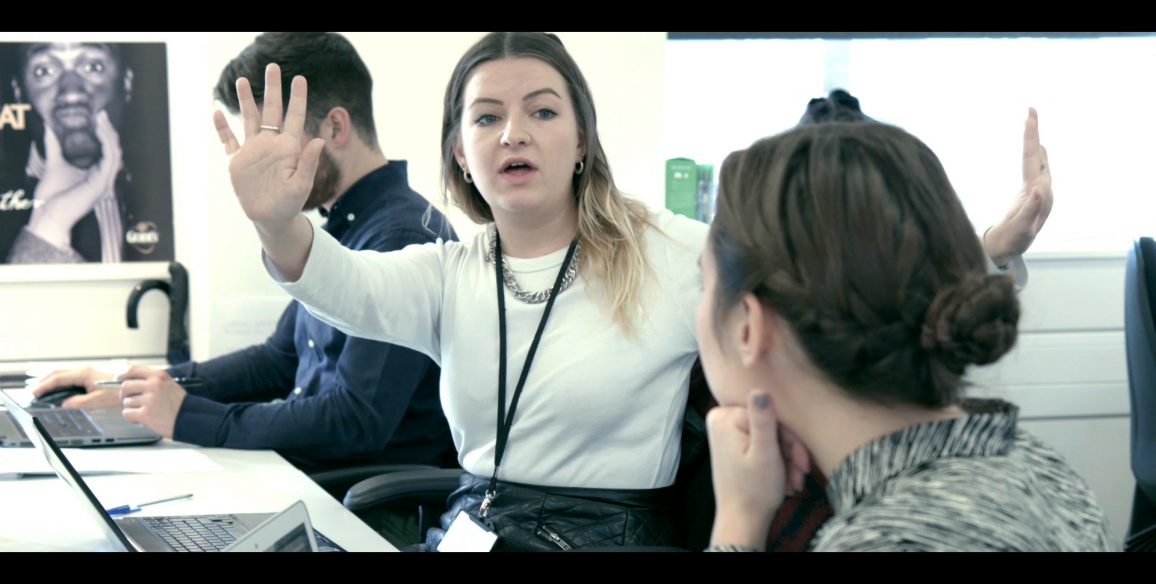
- It's a fact of life that not all available spaces we have to shoot in are never ending boardrooms full of flowers and statues and overlook Tower Bridge. Often, out of six execs who are shot in six different offices, two will be in a boardroom, two in their 'shabby chic' office (also known as 'shabby') and two in the only available meeting room complete with broken blinds, stained whiteboard and neglected Yukka. (yes - other companies have rooms like that too). A green screen solves the 'last available meeting room' problem (or 'challenge' as you might know it) and gives everyone the same look. This can be important. It's a fact that if one person is filmed in the boardroom their comments will be perceived as more important than those of someone filmed by the broken blind - which is unlikely to be your intention
Time & cost efficiency
- Without green screen, even if your six colleagues are in the same building on the same day we would probably need to move location once or twice to get some variety in the backgrounds. This isn't us being arty - if people sit in the same chair and are edited together it looks like someone is waving a wand as they appear in the same place. With green screen there is no need to change location so you can shoot far more people in a day. Maybe a two day shoot becomes a single day
Drive the message home
- The background can also become a space to enhance messages, highlight key points and add other information. Logos, branding, photos, text - anything that helps bring the message home